Tiktok Unknowingly Pushes Disordered Eating Onto Teens & Young Women
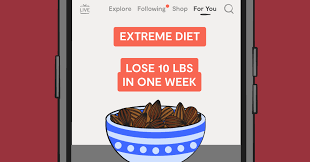
Did you know TikTok accounts made by 13 year olds were recommended eating disorder content within just 8 minutes of creating the account? The accounts that showed an interest in fitness or body image content were recommended videos about restriction or weight loss every 39 seconds! Fiona Yassin explains this in her article called, "Is Tiktok Promoting Eating Disorder Content to Teens?"
How Does The TikTok Algorithm Work?
The TikTok algorithm works by showing videos that the viewer looked at for longer than other videos, and videos that are liked. The algorithm tricks people into believing that the majority of people have an unrealistic body. In a study by The Wave Clinic, it showed that TikTok was the most used social media for teens (62.8%) with eating disorders. Within these teens the most searched topic was "diet."
“We are concerned that modern social media algorithms have potential to exacerbate eating disorder symptoms by subjecting vulnerable users to increasing amounts of content oriented on physical appearance, dieting, and exercise over time." (Griffiths et al., 2024)
Certain hashtags such as #thinspo and ones similar have been banned on TikTok, but numbers replace the letters and the new hashtags fly under TikTok's radar. On Tiktok there are some eating disorder "recovery" and "awareness" videos. Although this content isn't made with malicious intent it can still harm the young girls and women that view it. These videos can actually just show and explain how to participate in disordered behavior. During Covid 19 these behaviors got even worse because young girls and women were on Tiktok more than usual since schools were closed and nobody was allowed outdoors.
"The application algorithm records data from the single users and proposes videos that catch the kid’s attention specifically, by creating a personalized “For You” page [12]. This feed will suggest videos from anyone on the platform, not just from the followed accounts [11]. Therefore, if a user accidentally views a video dealing with anorexia on the homepage and, intrigued, searches for other videos alike, the algorithm will keep suggesting such videos, contributing to the development of obsessive behaviors, as in the examined case." (Villani et al., 2021). This can be extremely harmful to young and impressionable women. There is unfortunate studies that explain that users with eating disorders get more toxic videos in their algorithm than non-disordered users.
"Fig. 1. Split-half violin plots showing that the algorithms of TikTok users with eating disorders (blue, lefthand side) deliver significantly more appearance-oriented videos, toxic eating disorder videos, dieting videos, and exercise videos than TikTok users without eating disorders" (Dennis et al., 2024) I have personally noticed that my friends who struggle with disordered eating and thoughts have more disordered content on their feeds than my friends who don't have disordered eating/thoughts.


Create Your Own Website With Webador